
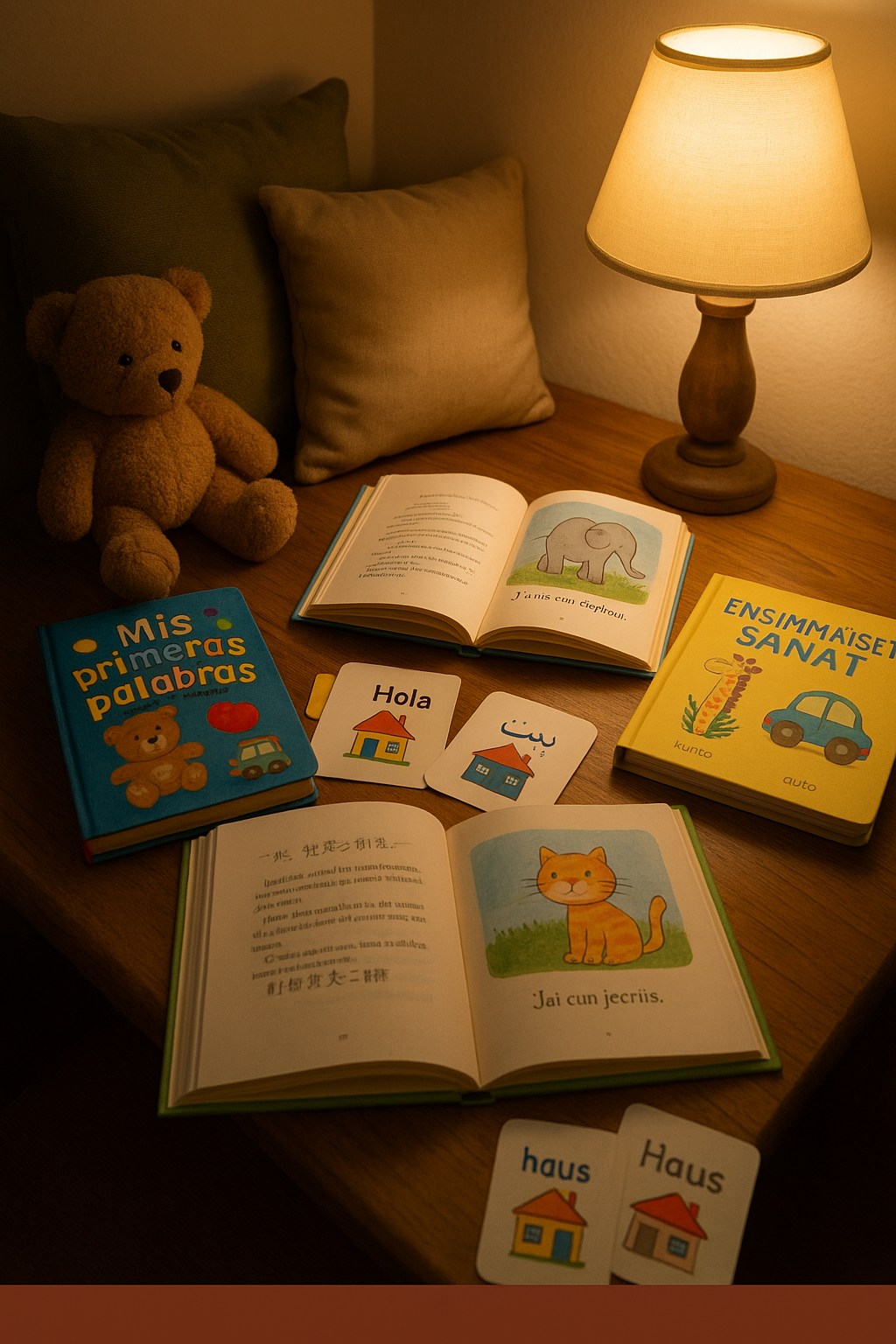
Raising a bilingual or multilingual child is a wonderful journey, but it also comes with unique challenges. As a mother of a multilingual child and someone who has studied family language policies through the lens of positive psychology, I understand how important it is to approach language learning in a way that is encouraging, flexible, and meaningful. In my academic research, I explore how positive psychology—focusing on strengths, motivation, and well-being—can help parents design language strategies that foster a love for languages rather than feelings of pressure or obligation.
A well-thought-out family language policy (FLP) provides structure for how different languages will be used at home. But this policy should not feel rigid—it should be adaptable to your family’s lifestyle and your child’s evolving needs. Below, I share some of the most common FLP strategies and how you can apply them in a way that keeps language learning a joyful experience.
Choosing a Strategy That Works for Your Family
There is no one-size-fits-all approach to bilingual or multilingual parenting. The right strategy depends on factors like family composition, the languages spoken, and the child’s exposure to each language. Here are three of the most widely used FLP strategies:
1. OPOL (One Parent, One Language)
This is one of the most well-known strategies for bilingual families. Each parent consistently speaks a different language with the child. For example, if one parent speaks French and the other speaks Polish, they will each use their respective language when communicating with their child.
Why it works:
- It creates a clear language boundary, making it easier for children to associate a specific language with a particular parent.
- It provides daily exposure to both languages in a natural way.
Potential challenges:
- If one language is not reinforced outside the home, children may favor the majority language.
- Some parents feel left out when they don’t understand their partner’s language.
How to keep it positive:
- Focus on meaningful interactions. Instead of forcing a language, make conversations fun with games, storytelling, or shared activities.
- If the minority-language parent feels isolated, consider having designated family time in that language.
2. Minority Language at Home (ML@H)
This strategy works well when both parents share the same minority language, using it exclusively at home while the majority language is acquired through school and society.
Why it works:
- It ensures the child gets strong foundational skills in the minority language before starting school.
- It provides rich vocabulary and cultural exposure.
Potential challenges:
- Children may start resisting the minority language as they get older and interact more with peers in the majority language.
How to keep it positive:
- Make the minority language feel valuable by linking it to enjoyable experiences like travel, books, music, or video calls with extended family.
- Allow some flexibility—mixing languages at home occasionally is natural and should not be seen as a failure.
3. Time and Place Strategy
With this approach, families designate specific times or places for different languages. For example, speaking Spanish during meals and French during playtime.
Why it works:
- It provides structured exposure while allowing for flexibility.
- It can work well in families where both parents are bilingual and want to pass on multiple languages.
Potential challenges:
- Children may take time to adjust to the boundaries.
- Inconsistent application of the strategy may lead to less exposure to one language.
How to keep it positive:
- Use routines and rituals to reinforce the time and place rule, such as reading bedtime stories in the minority language every night.
- Allow space for the child’s preferences—sometimes they may naturally gravitate toward one language in certain contexts.
The Role of Positive Psychology in Family Language Policies
A successful FLP isn’t just about enforcing rules—it’s about creating an environment where languages feel meaningful and enjoyable. Positive psychology highlights the importance of motivation, confidence, and emotional connection in learning. Here are some ways to integrate these principles:
- Encourage, don’t pressure: Children respond best when they feel intrinsically motivated. Celebrate their progress rather than correcting every mistake.
- Focus on strengths: Every child has a different learning style. Some love storytelling, while others engage better through music, art, or movement.
- Make language a social experience: Language thrives in relationships. Encourage your child to interact with relatives, friends, or community groups who speak the minority language.
- Emphasize the value of multilingualism: Share stories of how knowing multiple languages has benefited you or others, making the process feel purposeful.
Adapting Your Strategy as Your Child Grows
One of the most important things I’ve learned—both as a parent and in my research—is that flexibility is key. Your child’s language preferences, school environment, and social circles will evolve, and your FLP should evolve with them.
For example:
- A toddler may happily speak the minority language at home, but a school-aged child might resist because their friends don’t speak it.
- A teenager might prefer using the majority language socially but still engage with the minority language through music, books, or family traditions.
Being intentional from the beginning sets the foundation for success, but be prepared to tweak your strategy based on your child’s needs. The ultimate goal isn’t just bilingualism or multilingualism—it’s ensuring your child learns their languages in a positive, encouraging, and meaningful way.
Every family’s journey is unique, but with a thoughtful approach and a supportive atmosphere, your child can develop a lifelong love for languages. What strategies have worked for your family? I’d love to hear your experiences!
Leave a Reply