
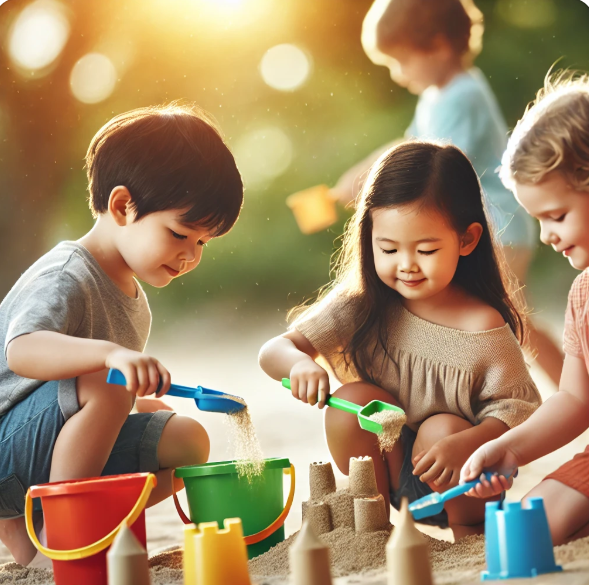
The early years of language exposure at home are foundational when raising a bilingual or multilingual child. However, as toddlers and preschoolers start to explore the world beyond their immediate family, their language learning environment becomes more dynamic. Extended family members, friends, caregivers, and society at large all contribute to shaping a child’s linguistic development. The environment a child grows up in plays a crucial role in how their languages will develop, evolve, and interact with each other.
The Expanding Language Landscape
During infancy, a child’s primary language input comes from their closest caregivers—parents, siblings, grandparents, or other extended family members. However, as toddlers and preschoolers grow, their exposure to language broadens. They start forming friendships, interacting with other children, and participating in structured early childhood education settings such as nursery, daycare, or kindergarten. Each of these interactions influences how they use and prioritize their languages.
The Influence of Family and Social Networks
Extended family members play an important role in maintaining and reinforcing home languages. Grandparents who speak in their native language, cousins who share a bilingual upbringing, or family friends who engage in multilingual interactions all help normalize multilingualism for the child. If a child regularly interacts with speakers of multiple languages, they are more likely to retain and use these languages actively.
Socialization with peers also impacts language use. If toddlers or preschoolers spend time with other bilingual or multilingual children, they may feel more comfortable using multiple languages in different contexts. Conversely, if their peer group primarily communicates in the dominant societal language, the child may gradually shift towards greater use of that language.
The Impact of Nursery, Daycare, and Kindergarten
The transition to formal childcare settings is often a turning point in a child’s language development. If the dominant language of the nursery or daycare differs from the home language, children will naturally start prioritizing the language spoken by their teachers and peers. This phenomenon is common and should not be seen as a rejection of the home language but rather an adaptation to the social context.
However, the impact of early childhood education on multilingual development can vary based on the setting. In environments that embrace bilingualism—such as international schools, language immersion programs, or multicultural communities—children may continue to use and develop multiple languages more naturally. Educators who support linguistic diversity can help reinforce a child’s home languages while also facilitating learning in the dominant societal language.
Creating a Supportive Multilingual Environment
While shifts in language preference are normal, parents can take active steps to support their child’s multilingual development:
- Encourage Continued Use of the Home Language: Even if children start using the majority language more frequently, parents and caregivers can maintain communication in the home language to preserve fluency.
- Foster Social Opportunities in Multiple Languages: Playdates with other bilingual or multilingual children, community events, or cultural activities help reinforce the use of different languages in natural settings.
- Select Language-Supportive Educational Settings: If possible, choosing nurseries or schools that value multilingualism can provide children with structured opportunities to develop all their languages.
- Stay Positive and Flexible: Language use will fluctuate based on context and exposure. Supporting a child’s entire linguistic repertoire rather than focusing solely on one language ensures they continue to benefit from their multilingual background.
Multilingualism as a Social and Cultural Asset
Living in a multilingual environment where different languages are spoken and valued encourages children to embrace their linguistic abilities with confidence. In communities where multilingualism is the norm, children will naturally develop a sense of ease in switching between languages based on context and interlocutor.
Ultimately, a child’s multilingual journey is shaped by the people and environments they interact with daily. By fostering positive language experiences at home, in social settings, and in early education, parents can help toddlers and preschoolers thrive in their multilingual development, setting the stage for lifelong linguistic and cultural benefits.
Leave a Reply