
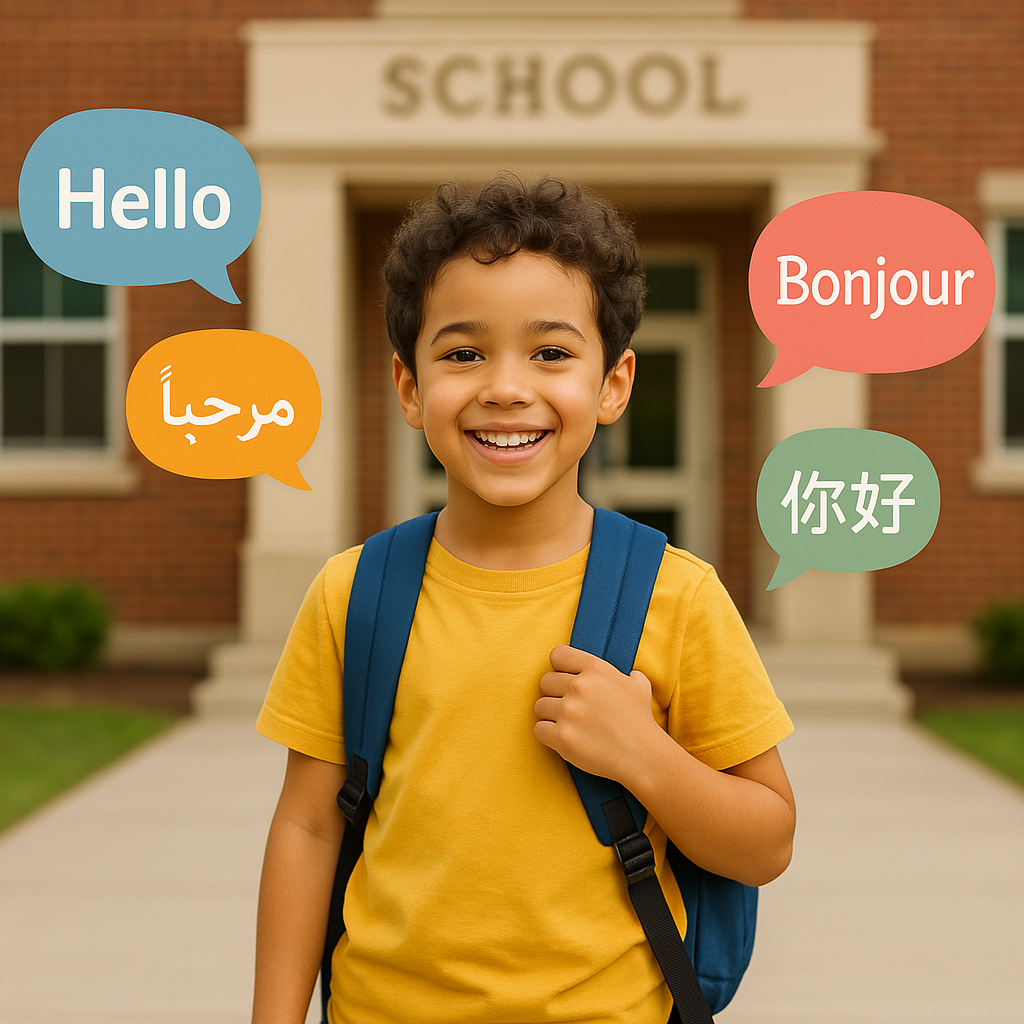
Raising multilingual children while living abroad is a beautiful goal—but let’s be honest, it’s not always easy. One of the biggest challenges expatriate families face is figuring out how to support their child’s home language once they start school. Whether you’re just beginning this journey or are navigating it midstream, it’s important to understand your schooling options and how they impact language development—especially for families striving to raise fluent multilinguals.
Schooling Options Abroad: A Mixed Bag
Depending on where you live, you may find schools that offer bilingual or foreign-language programs in your home language. For example, families speaking French, German, Spanish, or Mandarin may have access to international schools or heritage language programs that support both the home language and the local language. These options can be a huge help in maintaining literacy and fluency in the home language while integrating into the local culture.
But many of us don’t have that luxury.
In some locations, immersion programs in the school’s language dominate, and support for home languages may be limited or nonexistent. If your child is the only one in class (or even the whole school) who speaks your home language, it can feel isolating—for you and your child. Over time, this language imbalance can make it harder for your child to maintain fluency in the home language, especially if most of their academic and social life unfolds in another language.
The Role of Teachers: Allies or Focused on the Majority Language?
Teachers can play a pivotal role in either supporting your child’s home language or, unintentionally, sidelining it. Understandably, teachers often prioritize the school language—it’s the language of instruction, testing, and academic success. But when teachers recognize and value the home language, they can become powerful allies in your child’s multilingual journey.
It helps tremendously when educators show interest in the child’s background, ask about their language use at home, and even incorporate elements of the home language into classroom activities when possible. That said, many teachers may not have training or resources to support home languages actively, especially if your child’s language isn’t widely spoken in the school community.
What This Means for Long-Term Language Development
When the home language isn’t reinforced at school or through peer interaction, children can begin to shift toward the dominant language quickly. This is especially true once school becomes more demanding socially and academically. Without consistent input and opportunities to use the home language meaningfully, kids might lose confidence, vocabulary, or even their desire to speak it.
But here’s the encouraging part: You can support your child’s multilingualism—at home, in school partnerships, and within your community.
Practical Tips for Parents
- Create a strong home language foundation early. Speak, read, sing, and play in your language as much as possible, especially before school starts. The more exposure kids have early on, the easier it is to maintain.
- Make language use meaningful. Give your child real reasons to use the home language—talk to grandparents, write letters to cousins, cook using recipes in the home language, or watch favorite shows in your language.
- Build community, even if it’s small. Try to find or create playgroups with other families who speak your language—even if it’s just once a month. If that’s not possible locally, look for virtual language buddies or pen pals.
- Keep up literacy in the home language. Once your child starts learning to read in the school language, it’s tempting to focus only on that. But continuing reading and writing in your language builds vocabulary and confidence.
- Communicate with teachers. Let them know about your language goals. Ask if they’d be open to including your culture or language in a class activity or celebration. Most teachers are delighted to celebrate diversity when they understand its value.
- Stay patient and flexible. There will be phases where the home language takes a backseat. This doesn’t mean you’re failing. Language development isn’t linear—especially in multilingual kids. Keep the door open, keep the atmosphere positive, and keep going.
A Note to Teachers
To the amazing educators reading this: Thank you for all you do to support multilingual children. You have the power to make a world of difference by acknowledging and valuing students’ home languages. Even small gestures—like learning to say a few words in a child’s native tongue, celebrating multilingual books, or allowing kids to share stories from home—can make a child feel seen and encouraged to hold on to their linguistic identity.
Final thoughts
Supporting multilingual learners isn’t always straightforward—but with intention, collaboration, and lots of heart, it’s absolutely possible. As a mom walking this same path, I want you to know you’re not alone. The journey is long, but it’s also rich, rewarding, and worth every effort.
Let’s raise our voices—and our children’s—in every language we love.
Leave a Reply