
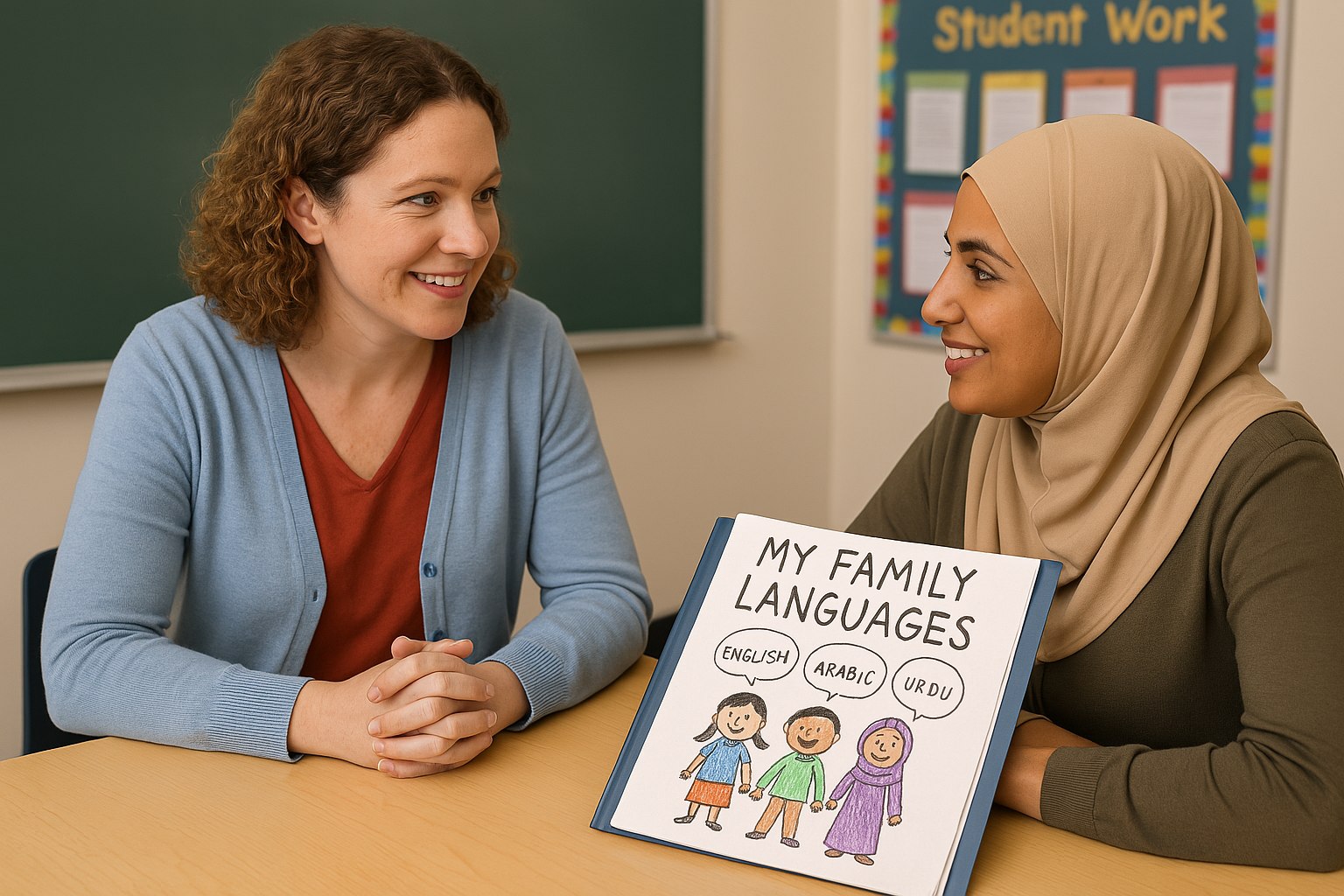
One of the most nerve-wracking steps in raising a multilingual child abroad is figuring out how to choose—or shape—a school environment that will support your child’s languages and identity. Whether you’re a new expat parent browsing school websites or your child is already enrolled in a local or international program, you might be wondering: Will this school support our home language? Will my child’s multilingual background be welcomed—or quietly overlooked?
These questions are valid. As a mother raising a multilingual child outside our home country, I’ve been there. You want your child to feel confident, understood, and valued—not just academically, but linguistically and culturally. The good news? You don’t need a perfectly bilingual school to support your child’s languages. And you don’t have to turn into that parent to advocate for what your child needs.
Here’s how to explore school options with confidence, ask the right questions, and build respectful partnerships with teachers that benefit everyone.
What to Look for in a School That Supports Multilingualism
You might not find a school that offers your home language as a subject—but that doesn’t mean multilingualism isn’t valued. Look for these signs:
- Diverse student population: Schools with children from many backgrounds are often more used to multilingual families and may already have support systems in place.
- Language visibility: Do you see multilingual signage, books in various languages, or language flags in classrooms or hallways?
- Inclusive curriculum: Are world cultures and languages celebrated through events, lessons, or reading material?
- Open-minded staff: Teachers and administrators who ask about your family’s language(s) or show interest in your culture are likely to be more supportive.
Tip: Don’t be afraid to ask if the school includes home languages in classroom activities, even informally. It tells you a lot about their philosophy.
What to Ask During School Visits (Or Parent-Teacher Meetings)
Whether you’re in the admissions process or already enrolled, here are respectful, useful questions to ask:
- “How do you support students who speak multiple languages at home?”
- “How do you help children maintain their home language while learning the school language?”
- “Are there opportunities for children to share their language or culture in class?”
- “Do you have other students who speak [your home language]?”
If the answer is, “No, but we’d love to learn more!”—that’s still a great sign. The goal isn’t to demand fluency from the school—it’s to find openness, flexibility, and interest.
Building a Positive Partnership With Teachers
Teachers are incredibly busy. But many are also eager to connect with families and learn from them. Here’s how to build a relationship that supports your child’s languages without overwhelming anyone:
- Share, don’t demand. Introduce your home language as part of your family story. Try: “We speak Urdu at home—it’s really important to us, and I’d love to keep that strong as she learns English here too.”
- Offer ideas. If a teacher seems unsure how to include your child’s language, gently suggest options: labeling classroom objects in multiple languages, having your child teach a word a week, or bringing in a picture book in your language.
- Be consistent but kind. If your child starts showing signs of language loss or discomfort, bring it up calmly. For example: “He’s starting to resist using Arabic at home—could we brainstorm ways to keep him feeling proud of it here too?”
Advocating Without Feeling Pushy
I know it’s hard. You want to speak up, but you also don’t want to be labeled “difficult.” Here’s the thing: you’re not asking for special treatment. You’re helping the school understand and support your child more fully.
Try these mindsets:
- “I’m not being demanding—I’m being collaborative.”
- “I’m not overstepping—I’m offering insight about my child.”
- “I’m not creating problems—I’m helping solve them early.”
When you advocate with kindness, clarity, and empathy, most educators are grateful. You become a partner, not a problem.
Final Thoughts
You don’t need the perfect multilingual school to raise a thriving multilingual child. What you do need is awareness, confidence, and a willingness to build bridges between home and school. Trust your instincts, be your child’s voice when needed, and remember: you’re not alone.
There are so many of us walking this road beside you—quietly, bravely, and joyfully raising children who can speak to the world in more than one voice.
Leave a Reply