
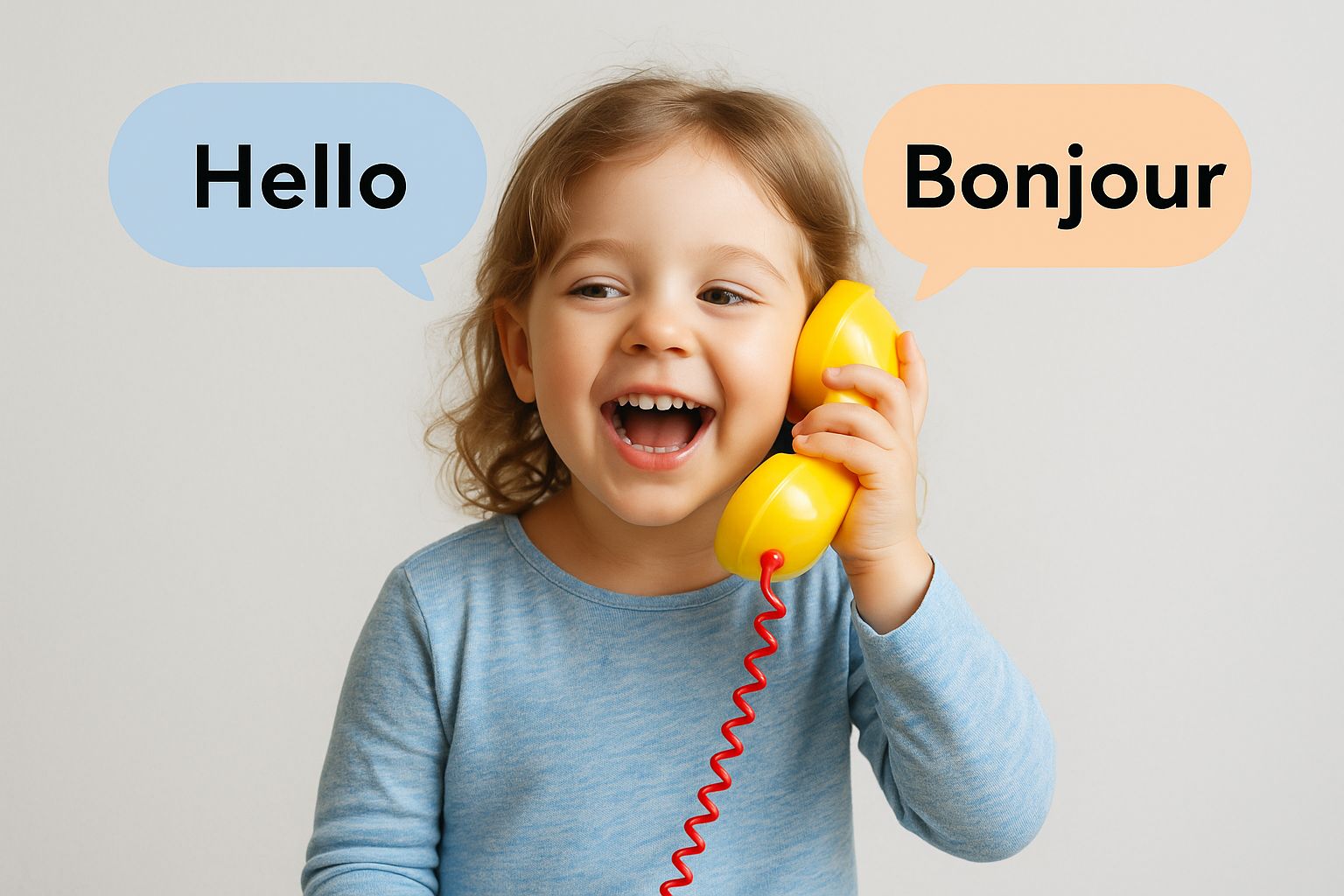
In my previous blog post, “Debunking Common Myths About Multilingualism in Children,” I explored several widespread misconceptions that often cause worry among parents raising bilingual or multilingual kids. One of those myths—“Mixing languages means the child is confused”—deserves a deeper look. So today, I want to unpack this topic further and answer a question many multilingual parents have asked themselves:
Is code-switching normal?
What is Code-Switching, Anyway?
Code-switching refers to the practice of alternating between two or more languages within a conversation, sentence, or even a single phrase. It’s something you’ve probably done yourself without even realizing it—like saying:
“Let’s go to the park después de cenar.”
This blending is completely natural and very common among people who speak more than one language. For children, especially those still building their vocabulary, it’s a practical strategy—they reach for the words they know best to get their message across.
No, It’s Not a Sign of Confusion
Despite the fears some people have, code-switching does not mean your child is confused or has a language delay. In fact, research shows that it’s a sign of linguistic competence, not deficiency. Children who code-switch demonstrate an ability to navigate and draw from two linguistic systems. It’s quite a sophisticated skill when you think about it!
In a 2004 study by Genesee, Paradis, and Crago [1], researchers found that code-switching is typical in bilingual development and even reflects awareness of social and conversational norms. Kids often adjust their language use based on who they’re speaking to, which is a remarkable demonstration of social understanding.
Why Children Code-Switch
There are many reasons why children (and adults!) mix languages:
- Vocabulary gaps: A child might not yet know the word in one language but knows it in another.
- Habitual expressions: Some phrases just “feel right” in a specific language.
- Contextual comfort: Certain topics may be associated with specific languages (e.g., school in English, home in Arabic).
- Emotional connection: Words that carry emotional weight—like “mama,” “no,” or “I love you”—might be used regardless of the main language being spoken.
Real Life: Our Code-Switching Moments
In our household, code-switching is part of everyday life. When mixing languages, my daughter isn’t confused—she’s expressing herself with the resources she has. Over time, as her vocabulary in both languages grows, the switching becomes more nuanced, more intentional, and sometimes disappears altogether depending on the setting. Bilingual children actually tend to speak more purely in one language when interacting with someone who doesn’t understand the other that well. That shows not only clarity, but social sensitivity—the child is figuring out what others can understand and adjusting her language accordingly. Isn’t that amazing?
Should Parents Correct or Stop Code-Switching?
In general, no—you don’t need to correct it constantly. Instead, model consistent language use yourself. If your child says something like, “Give me el cuchillo,” you can simply respond with the full sentence in your target language:
“Sure, here is the knife. The knife is sharp, so be careful.”
This natural modeling gives the child the words they need without making them feel like they made a mistake.
Final Thoughts
So yes—code-switching is not only normal but also a healthy and intelligent part of multilingual development. It’s a sign your child is using all their language tools to connect, express, and make sense of their world.
As parents, let’s not stress about occasional language mixing. Instead, let’s celebrate it as what it truly is: a superpower in action.
References cited in this blog:
- Genesee, F., Paradis, J., & Crago, M., (2004). Dual language development & disorders a handbook on bilingualism & second language learning. Baltimore, MD: Paul H. Brookes Publishing Co.