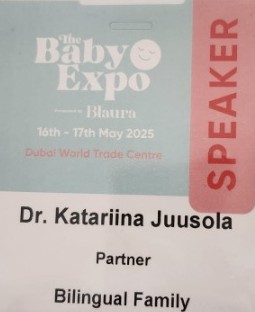
Earlier this month, I had the pleasure of participating in The Baby Expo Dubai—the largest exhibition of its kind in the region, bringing together experts, parents, and brands focused on maternity, baby, and toddler care. With its vibrant atmosphere and wide-ranging program, the Baby Expo was more than just a showcase of products; it served as a meaningful platform for knowledge sharing and community building among those passionate about early childhood development.
What struck me most was the strong presence of discussions around multilingualism. Across multiple sessions, experts from various fields contributed insights into how families can successfully navigate multilingual parenting. It was encouraging to see how this vital topic is gaining visibility in such an influential setting.
I had the honor of joining a panel titled “Tiny Hands, Big Minds: The Role of Play in Nurturing Speech & Language Development.” Our conversation focused on the powerful link between play and language acquisition—especially in multilingual environments. I contributed perspectives on early multilingual language development, focusing on how playful, responsive interactions lay a natural foundation for children to develop multiple languages.
Our panel featured a diverse and knowledgeable group of professionals, each bringing unique insights to the discussion. In addition to myself, the panel included a speech and language therapist, a nursery general manager, and a paediatrician. Together, we explored how caregivers can use play to foster early communication and multilingual development—drawing on insights from speech intervention, brain development, and the medical links between hearing and speech delays.
Beyond our session, multilingualism was also featured in other panel discussions. One particularly engaging talk explored the experiences of “third culture kids” from the perspective of parents raising children across cultures. This discussion explored both linguistic development and identity, highlighting how language can serve as either a bridge or a barrier to a child’s sense of belonging and cultural connection.
Another insightful session was led by two speech and language therapists, who focused on bilingualism. They debunked common myths, such as the notion that bilingualism causes speech delays, and discussed the real challenges that many multilingual parents face, including managing language exposure and addressing societal misconceptions.
Throughout the event, a shared message resonated clearly: raising multilingual children is not only possible—it is deeply enriching when supported by the right strategies and understanding.
As I reflect on my experience, I’m reminded of the importance of continuing to share research-informed strategies for multilingual parenting. Whether it’s through playful engagement, cultural storytelling, or simply being intentional about language exposure at home, small daily actions can have a profound impact on a child’s language development.
Equally important is the role of community—bringing together parents, educators, health professionals, and researchers who share a common goal: helping children grow up with the cognitive, social, and emotional advantages that multilingualism offers.
Let’s keep building that community and spreading the message—multilingualism is not a challenge to be overcome, but a miracle to be nurtured.