
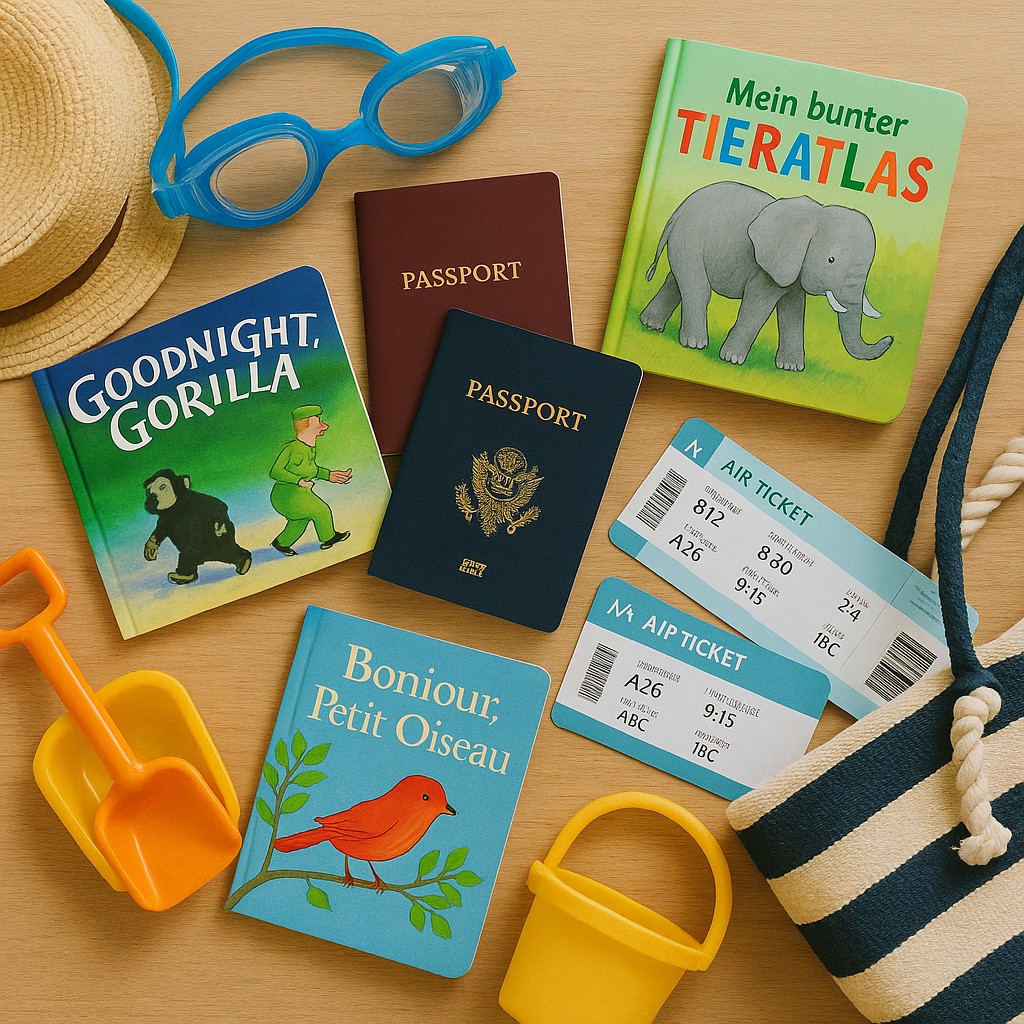
Multilingual children’s language development isn’t a smooth, steady climb throughout the year. It ebbs and flows. Right around this time—just before the summer holidays—you might notice that your child isn’t quite as fluent in their home language(s) as they used to be. After spending an entire academic year immersed in the majority language of school, this is completely normal.
But here’s the good news: summer holidays often arrive just in time to give the home language(s) a much-needed boost.
For many multilingual families, summer is a powerful reset. It’s a time to reconnect—not just as a family, but with culture, identity, and language. More relaxed days, extended family time, and travel opportunities can all help reignite the spark of your child’s minority language. And the beauty is: this support doesn’t have to be forced or formal—it can come from simple, joyful moments.
🌍 Why Summer Break Matters for Language Development
Research has consistently shown that long stretches of time spent in a rich language environment can lead to noticeable improvements in language skills. This includes vocabulary growth, greater confidence in speaking, and deeper understanding of cultural nuances.
So if you’re planning a longer trip to your home country this summer, know that it’s more than just a vacation. It’s also an immersive language learning experience! Being surrounded by extended family, community events, food, music, and local conversations offers a kind of language exposure that can’t be replicated in classrooms.
But even shorter trips can make a meaningful impact. A few days with cousins who only speak the home language, or a family gathering where the minority language is the norm, can reignite your child’s motivation and passive knowledge.
And if travel isn’t an option? Don’t worry—summer at home can still provide a rich language boost. What matters is intentional and enjoyable engagement.
Easy Ways to Make the Most of Summer for Language Learning
Here are seven practical and relaxed ways to support your child’s home language(s) during the summer months:
1. Let language happen through play
Whether it’s board games, outdoor adventures, or storytelling under the stars, playful language use is often the most effective. Choose games and activities that naturally encourage communication in your language.
2. Create theme days
Have “Home Language Mondays” or “French Fridays” where you cook together, listen to songs, or do crafts while staying in the target language.
3. Connect with community
Look for local meetups, summer camps, or playgroups where your child can interact with other children who speak the same language.
4. Involve extended family
Even if you’re not traveling, a regular video call with grandparents or cousins can keep language ties strong—and meaningful.
5. Read together—In the target language
Visit your local library or bring back books from your travels. Let your child choose what they’re curious about to keep it fun.
6. Watch films or shows in the minority language
Create a movie night tradition—but switch the language. Subtitles can help bridge comprehension.
7. Encourage journaling or scrapbooking
If your child is old enough, suggest keeping a summer diary in the home language. Pictures, short captions, and reflections can make for a great keepsake too!
A Final Word
Summer isn’t just a break from school—it’s an open window for language to flourish. It’s a time when family life can take center stage and the home language can breathe again. Whether you’re heading abroad, visiting grandparents, or just soaking up slow mornings at home, small efforts can have a big impact.
Language growth doesn’t always show itself immediately. But the seeds you plant this summer—in laughter, stories, and shared experiences—can blossom in unexpected ways all year long.